
From research to action: results of the ‘Veterans’ Voices’ project with expert Anatolii Melnychuk
-
 Reading time: 7 min
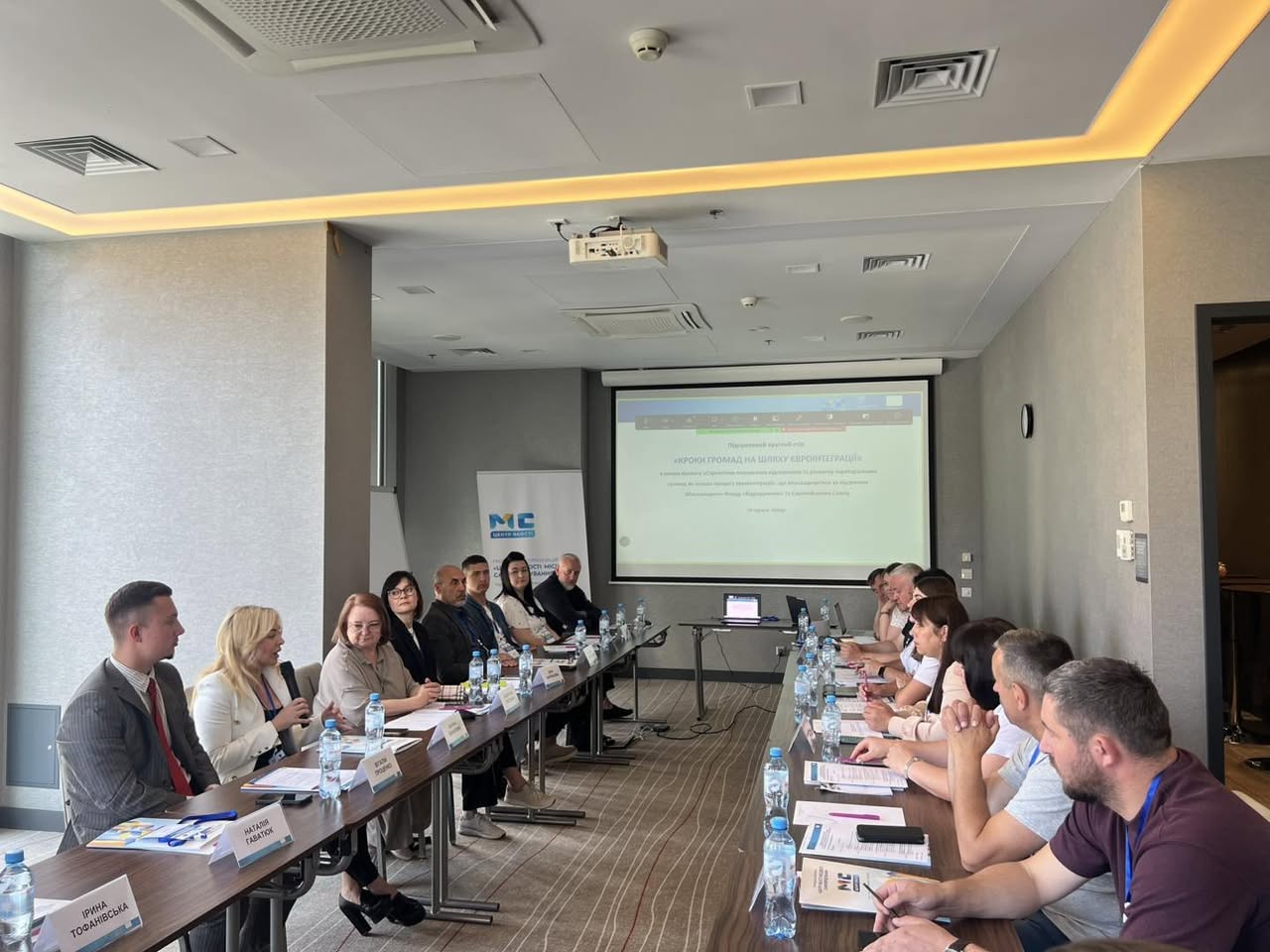
The study of the needs of male and female veterans under the project «Veterans’ Voices: Taking Needs into Account in Community Strategies» has been successfully completed. Behind us are dozens of focus groups with military personnel, businesses, officials and residents of the Fastiv, Boiarka and Byshiv communities.
A huge amount of information has been collected, analysed and prepared so that it can become a real foundation for long-term development strategies for Kyiv Oblast.
What were the main conclusions of this study? Where did the reality of the communities diverge from expectations, and what should be done with the results going forward? We spoke about this with the project’s expert and focus-group facilitator — Anatolii Melnychuk.
❓ Anatolii, the study has officially been completed. Summarising everything heard at the focus groups, what was the main discovery or perhaps unexpected conclusion you reached as an expert? What surprised you most in the results?
Anatolii Melnychuk:
«The most unexpected thing was that the local community’s level of readiness for a comprehensive set of measures to integrate veterans remains low. The image of the defender is strong, and there is respect for the feat of Ukrainian soldiers. But readiness for the painstaking, everyday work of integration and interaction with the veteran community is insufficient.
The main narrative shared by most focus-group participants is that the state owes everything to the defenders, so it should provide everything for them. What surprised me was the low level of work with vulnerable population groups and the understanding that civil society and local communities are the foundation for veterans’ integration, together with a desire to avoid personal responsibility for this process by shifting it onto the state.»
❓ When the project was launched, you noted that the Fastiv, Boiarka and Byshiv communities have different resource and staffing potential. Now that the results are in, what fundamental differences in veterans’ requests did the study record in these communities? Where were the needs purely material, and where institutional?
Anatolii Melnychuk:
«Responding to the request — which, incidentally, has still not been fully formulated by the veteran community — requires a serious resource. All the local self-government bodies are approaching this task consciously and with genuine dedication. Three communities are too few for ranking.
What can definitely be said is that engaging civil society, delegating part of the obligations for shaping an effective veterans’ policy to the public, and creating conditions for the institutionalisation of the veteran community have not yet been achieved in any of the communities. It is extremely important to build trust within the community around the integration of veterans in each of the communities.»
❓ One of the blocks of the study concerned business. What real (rather than declarative) barriers to interaction between local entrepreneurs and veterans did the surveys and discussions confirm? Is business in these communities ready to invest in veteran start-ups, or is it still limited to adapting workplaces?
Anatolii Melnychuk:
«Representatives of small and medium-sized business took part in the focus groups. They showed themselves to be socially responsible and sensitive to the topic of the veteran community. At the same time, they do not want to be merely a source of funding for events or involvement in resolving individual issues. They want a transparent, clear and commercially viable veterans’ policy.
In their opinion, such a policy should balance demand for employment in the community, wider involvement of local business in providing services to members of the veteran community, and the implementation of measures and projects. At some focus groups, business representatives appealed to the need to use the experience gained by veterans in civilian life, and for wider use of digital technologies in the system of working with veterans.»
❓ You worked a great deal on identifying the “competency deficit” among local officials. Having received the final data, where exactly did this gap prove most critical? What specific applied knowledge or skills do officials lack today in order to integrate the results of your study into real documents?
Anatolii Melnychuk:
«Working with vulnerable population groups requires basic niche knowledge of legal procedures, psychological support, social work, resilience to stress, ethics and digital skills. These are things that need to be strengthened not only among officials and part of civil society who work directly with the veteran community and in its interests. These are competencies that, through formal and non-formal education, need to be improved for a wide range of both officials and citizens in general.
But, to answer your question directly, I would single out communication competencies. Informational support for veterans’ policy and the ability to work through different channels. This is the key to improving its effectiveness at the current stage, above all.»
❓ Often the results of even the highest-quality studies risk ending up as reports gathering dust on shelves. What clear course of action do you propose to the communities now? How exactly will the collected “veterans’ voices” technically and legally be transformed into sections of the official development strategies of these three communities?
Anatolii Melnychuk:
«This is an important question. The Ministry for Communities’ and Territories’ Development has proposed an updated methodology for drafting territorial community development strategies. One of the tasks of the update is to ensure planning based on data and research. Taking into account the needs of vulnerable population groups is one of the main value orientations of modern strategic planning.
Hearing veterans’ voices is not just about one paragraph of a community’s main planning document. To me, it is about values. There is no meaningful direction for life in Ukraine without taking them into account. Communities are changing their lives by improving veterans’ policy. The strategy developer receives the study materials and focuses on institutional support for the irreversibility of veterans’ integration in the community. So when we talk about the effectiveness of our project and its impact on planning culture, we are talking about changes in veterans’ policy that it determined through the implementation of the recommendations developed.»
❓ The trust you mentioned in a previous interview is built on results. How did the veterans themselves and their families react to the conclusion of the study? Do you feel that after these focus groups they gained more confidence that they were truly heard, and are they ready to get involved in implementing future development projects?
Anatolii Melnychuk:
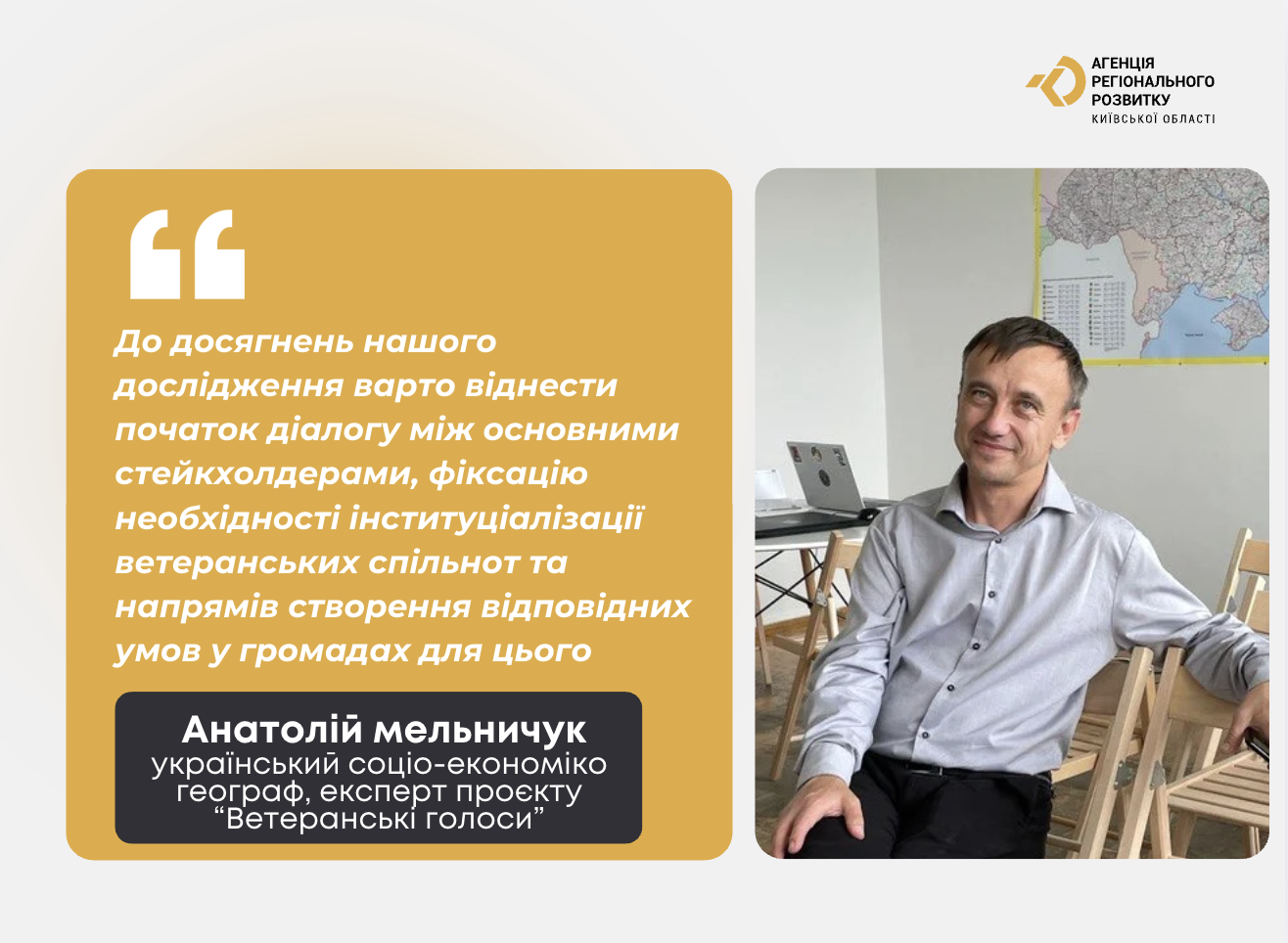
«A focus group, as a sociological research tool, aims to obtain new information about the issue being studied. The achievements of our study include the start of dialogue between the main stakeholders, recording the need for institutionalising veteran communities and the directions for creating appropriate conditions for this in the communities, early involvement of veterans in the planning process, and influence on the implementation of its measures.»
ℹ️ The project “Veterans’ Voices: Taking Needs into Account in Community Strategies” is being implemented by the NGO “From Village to City” in partnership with the Kyiv Regional Development Agency with the support of the “Enabling Civil Society for the Resilience and Recovery of Ukraine” programme (“Impulse Project”), implemented by the International Renaissance Foundation together with the East Europe Foundation, with the support of Norad and in partnership with Sida.
#ImpulseForNGO #VeteransVoices #KyivOblast #CommunityDevelopment #VeteransPolicy #EconomicResilience